Consent Decree Virtual Public Hearing
|
Tue, Aug 11, 2026
|
Blog Post Click Here
|
SITE-WIDE REBOOT COMING 2027
|
Consent Decree Virtual Public Hearing | Tue, Aug 11, 2026 | Blog Post Click Here | SITE-WIDE REBOOT COMING 2027 |
Consent Decree
Community Policing, Engagement, and the District Strategic Plan
Community Conversations: What Residents Raised Across Six Districts
An independent CTWC working record built from public Community Conversation boards, harvests, and report-outs.
What this record shows
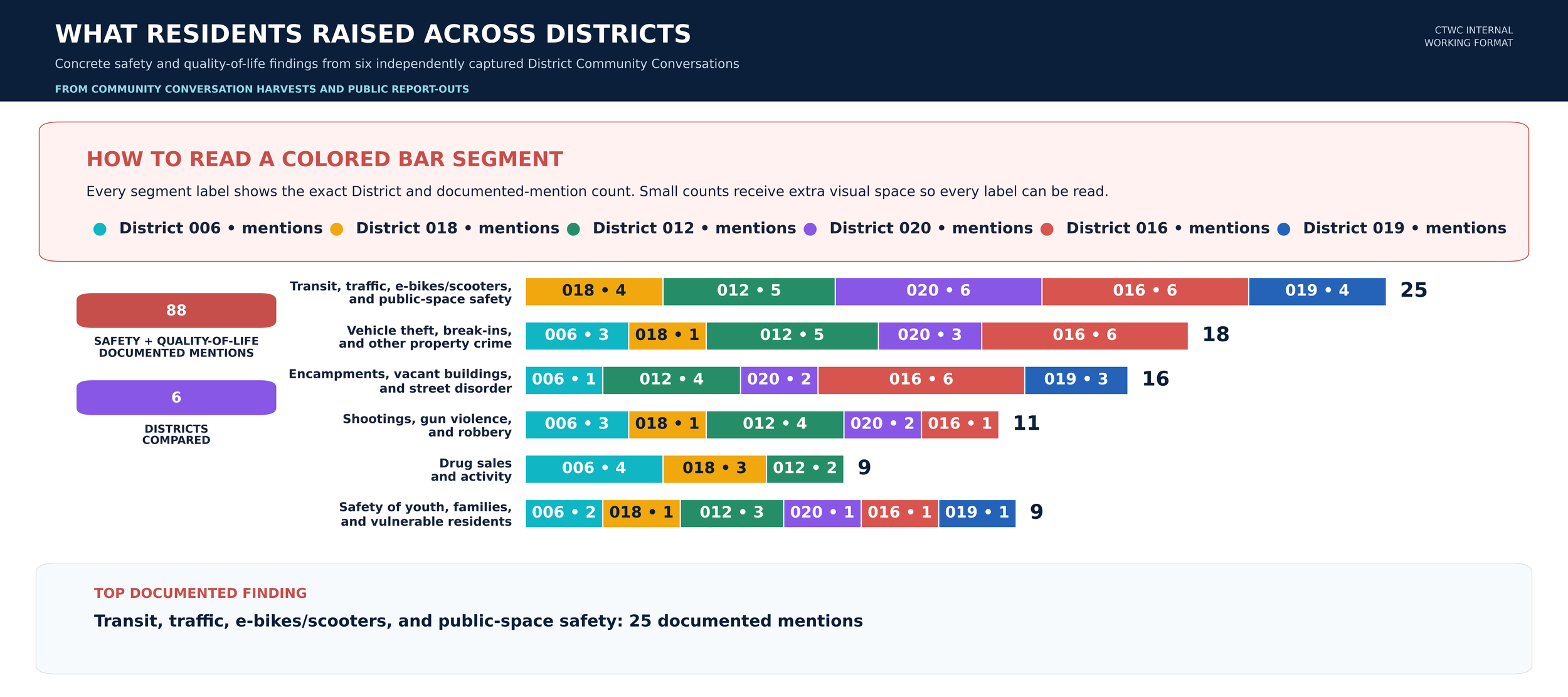
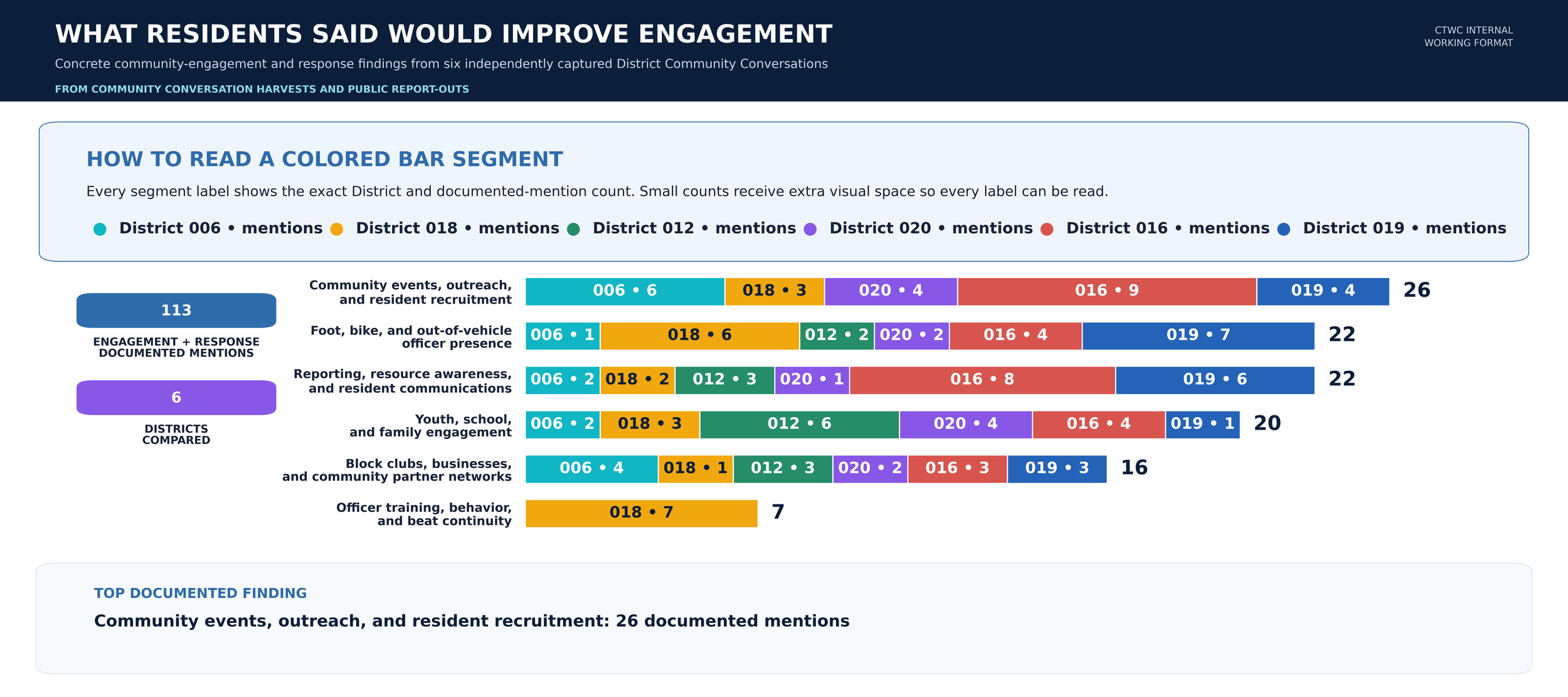
Chicago Together We Can independently documented public material from Community Conversations in the 006th, 018th, 012th, 020th, 016th, and 019th Districts.
The current record organizes 201 distinct, source-linked public mentions into 12 concrete categories. This analysis provides residents and CPD leadership a readable view of two things: what residents said needs attention and what residents said would improve community engagement.
Safety and Quality of Life Concerns
The leading documented safety finding was traffic, transit, e-bikes/scooters, and public-space safety, with 25 public mentions across the six District records.
Residents also raised vehicle theft and break-ins; encampments, vacant buildings, and street disorder; shootings, gun violence, and robbery; drug activity; and safety concerns affecting youth, families, and vulnerable residents.
What Would Improve Engagement
Residents described practical ways to improve community engagement. The leading documented request was community events, outreach, and new resident recruitment, with 26 public mentions.
Other recurring requests included visible foot, bike, and out-of-vehicle officer presence; clearer reporting, resource awareness, and resident communication; and youth, school, and family engagement.
How to read this record
Each chart count is tied to public material CTWC was able to document: a photographed community board or harvest entry, a public table report-out, or a public microphone exchange. That creates a transparent record that can show patterns across Districts while retaining a path back to the original public source.
The counts represent documented public mentions. They do not represent a count of residents, a vote, crime statistics, or CPD’s official priority list. Districts used different meeting formats and different public material was available to document.
Why this matters
Community Conversations give residents a chance to identify local concerns and discuss possible responses. A usable record helps make that input easier to preserve, compare, explain, and revisit.
The Consent Decree calls for CPD community meetings to identify problems and concerns and to provide an opportunity to discuss responses and solutions.
CTWC’s independent working record shows what becomes possible when public qualitative input is organized into clear, source-linked categories rather than remaining scattered across boards, notes, and individual meetings.
What comes next
The charts demonstrate the beginning of a stronger community-feedback process: capture what was raised, organize it into clear categories, and provide a leadership-readable view without losing the local details.
CTWC is developing a Community Engagement Intelligence and Feedback Loop that can add a voluntary participant-facing return path: What We Heard and What Happens Next. The goal is simple: residents who take time to participate should have a clearer way to see what was documented, what information is available, and when the next update will occur.
Want to receive updates on this work?